
Debt-to-Income Ratio Explained: Why Lenders Look at It Alongside Your Credit Score

Your debt-to-income ratio (DTI) is one of the first indicators lenders use to understand whether you can comfortably take on another loan. It compares your total monthly debt payments with your monthly income, helping lenders assess your repayment capacity.
While there's no single cut-off, many lenders generally prefer a DTI below 40–43%, although this may vary depending on their credit policies and the type of loan.
A good credit score is important, but it isn't the only factor that influences a lending decision. Your debt-to-income ratio helps lenders understand whether your existing financial commitments leave enough room for a new EMI.
What Is Debt-to-Income Ratio?
The debt-to-income ratio, often shortened to DTI, compares your total monthly debt obligations with your gross monthly income. In simple terms, it shows what percentage of your monthly income already goes towards repaying debt.
If you've ever wondered what the debt-to-income ratio is, think of it as a measure of affordability rather than credit behaviour. While your credit score reflects how responsibly you've managed credit in the past, your DTI indicates whether you can comfortably afford additional repayments.
The DTI full form is Debt-to-Income Ratio, and it is widely used by banks and NBFCs when assessing loan applications.
How to Calculate Your Debt-to-Income Ratio
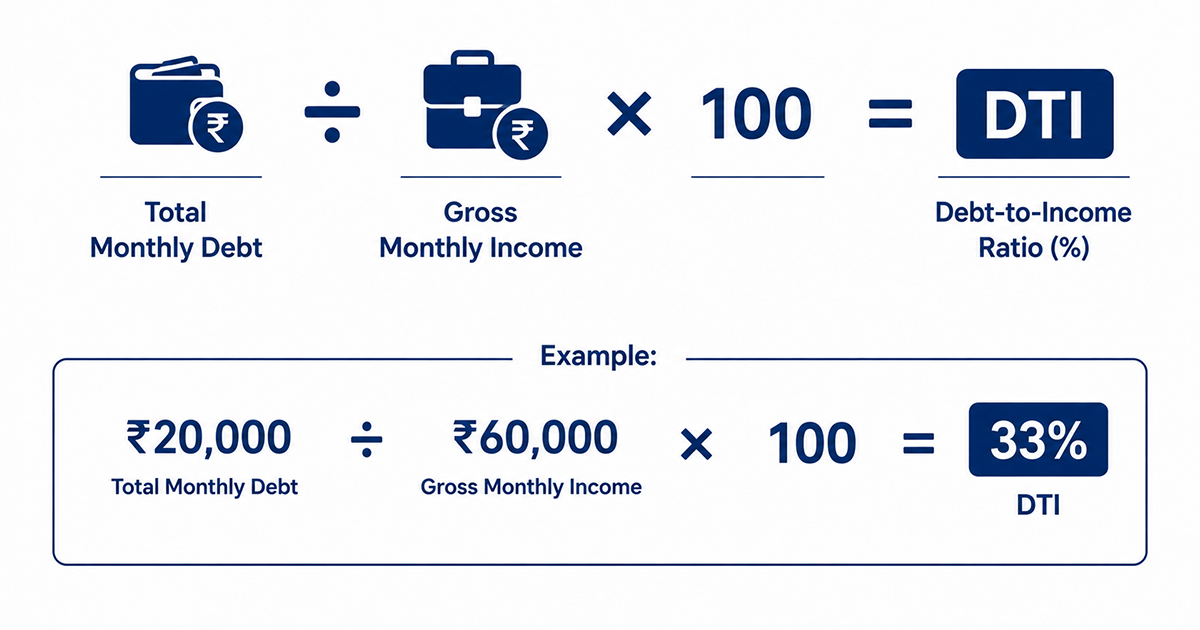
Understanding how to calculate the debt-to-income ratio is straightforward.
Formula
Debt-to-Income Ratio = (Total Monthly Debt Payments ÷ Gross Monthly Income) × 100
Example
Suppose:
- Gross monthly income: ₹80,000
- Home loan EMI: ₹18,000
- Car loan EMI: ₹8,000
- Credit card minimum payment: ₹4,000
Total monthly debt = ₹30,000
DTI = (30,000 ÷ 80,000) × 100 = 37.5%
This means 37.5% of the borrower's monthly income is already committed to debt repayments before taking a new loan.
Check Your Credit Score
Know where you stand before applying for a loan. Check your Credit Score for free.
What Is a Good Debt-to-Income Ratio?
Although there is no RBI-prescribed ideal DTI, lenders generally prefer borrowers whose monthly debt obligations leave enough room to comfortably repay a new loan.
| Debt-to-Income Ratio | What It Generally Indicates |
|---|---|
| Below 30% | Strong repayment capacity |
| 30–40% | 30–40% Generally comfortable for many lenders |
| 40–43% | 40–43% May still qualify, depending on income and loan type |
| Above 43% | Above 43% Higher repayment burden; additional assessment may be required |
The preferred debt-to-income ratio for home loan applications may vary between lenders. Along with your DTI, they also consider factors such as income stability, employment history, existing financial obligations and your overall credit profile.
DTI vs Credit Score: Why Lenders Check Both
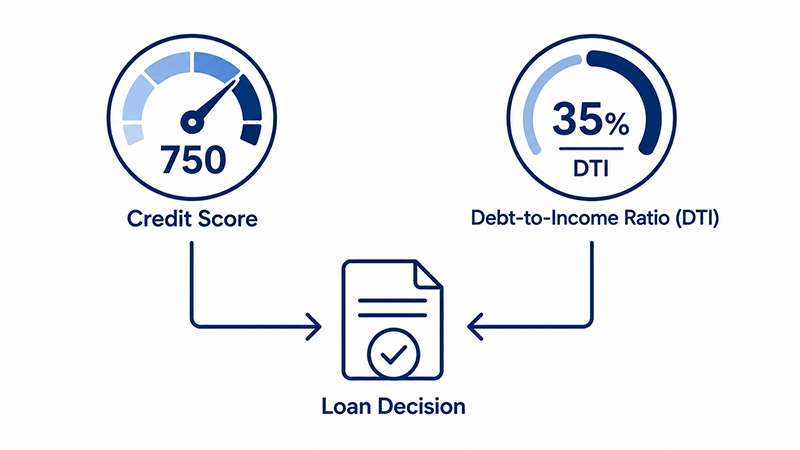
Your debt-to-income ratio and credit score measure two different aspects of your financial profile.
- Credit score: Shows how responsibly you've managed credit in the past. If you're planning to buy a property, understanding the credit score for home loan requirements can help you assess your eligibility.
- Debt-to-income ratio: Shows whether your current income can comfortably support another loan.
A borrower may have an excellent credit score but still have a high DTI because of multiple existing EMIs. Likewise, someone with a moderate DTI but a poor repayment history may still be considered a higher lending risk.
This is why lenders evaluate both together before making a lending decision, especially for larger borrowings such as home loans. They typically review your credit information from a credit bureau such as CRIF Credit Information Services Pvt. Ltd. (formerly CRIF High Mark Credit Information Services Pvt. Ltd.), along with your debt-to-income ratio, to gain a more complete understanding of your creditworthiness and repayment capacity.
From the Bureau's Desk
Your credit score reflects your borrowing history, while your debt-to-income ratio reflects your current repayment capacity. Together, they help lenders build a more complete picture of your financial profile.
How to Lower Your DTI Before Applying for a Loan
If your debt-to-income ratio is higher than you'd like, improving it before applying for a loan can strengthen your application.
Use this checklist before you apply:
- Pay down existing debt
Reducing outstanding loan balances or credit card dues lowers your monthly debt obligations. - Avoid taking on new debt
Postpone applying for new loans or credit cards until your current application is complete. - Increase your income where possible
Additional or stable income can improve your DTI by increasing the income side of the calculation. - Review your credit report regularly
Check that your loan and repayment information is accurate before submitting a loan application. - Maintain responsible credit behaviour
Pay EMIs and credit card bills on time to build a stronger credit profile alongside a healthier DTI.
Your debt-to-income ratio can improve over time as your income grows or existing debts are reduced. At the same time, understanding how your credit score is calculated can help you strengthen another important part of your loan application.
If you're planning to apply soon, it's also a good idea to see your full credit report and review your credit profile before approaching a lender.
Take Control of Your Borrowing Readiness
A good credit score and a healthy debt-to-income ratio work together to strengthen your loan application. Before applying, review your existing debt, monitor your credit profile and ensure the information in your credit report is accurate. Understanding both numbers can help you approach lenders with greater confidence.
→ Check Your Credit Score
Know both numbers before you apply. Check your Credit Score for free.
Frequently Asked Questions
1. What is a good debt-to-income ratio?
Although there is no fixed requirement, many lenders generally prefer a debt-to-income ratio below 40–43%. The ideal range may vary depending on the lender, loan type and your overall financial profile.
2. What debt is included in the debt-to-income ratio?
The meaning of DTI refers to the percentage of your monthly income that goes towards debt repayments. Lenders typically include existing loan EMIs, credit card minimum payments and other regular debt obligations. Everyday household expenses are generally not included.
3. Is rent included in the debt-to-income ratio?
Rental expenses are not always treated as debt obligations for DTI calculations. However, lenders may still consider your overall monthly expenses when assessing repayment capacity.
4. Does a high debt-to-income ratio affect loan approval?
Yes. A higher DTI may indicate that a significant portion of your income is already committed to debt repayments, which could affect your eligibility or the amount a lender is willing to sanction.
Disclaimer: This article is intended for general educational purposes only and should not be considered financial or legal advice. Credit reporting timelines, CRIF Credit Score calculations, and lender policies may vary. Always verify your account details with your lender and refer to your latest CRIF HighMark credit report for the most accurate information.
Written by: CRIF Editorial Team | Published: July 2026 | Last Updated: July 2026