
10 Proven Ways to Improve a Low Credit Score in India

If you're wondering how to increase your credit score after missed payments, high credit card balances, or inaccuracies on your credit report, the good news is that consistent financial habits can make a meaningful difference over time. Credit bureaus such as CRIF HighMark regularly update your credit report as lenders submit new information, meaning positive financial behaviour can gradually strengthen your score.
In India, credit scores are typically measured on a scale of 300 to 900, and maintaining a score of 750 or above is generally considered favourable by lenders. This guide explores ten practical strategies to help improve your credit score, including reducing credit utilisation, making timely payments, and managing credit applications wisely.
1. Pay Every Bill On Time, Every Time
Payment history is one of the most important factors credit bureaus use when calculating your credit score. Every loan EMI and credit card bill payment is tracked and recorded as a "Days Past Due" (DPD) entry, which reflects the exact number of days a payment was overdue. For example, an on-time payment is recorded as '000', while a payment made 40 days late appears as '40'. These records remain on your credit report and can influence how lenders assess your creditworthiness.
To maintain a healthy credit profile, try to pay your full credit card bill by the due date whenever possible. Paying only the minimum amount due prevents the payment from being marked as late, but the remaining balance carries forward and may attract interest charges. Over time, this can increase your outstanding debt and keep your credit utilisation higher than necessary.
From the Bureau's Desk
Based on bureau data, consistent on-time payments over 6 consecutive months produce the most measurable score improvement for borrowers recovering from missed payments.
2. Bring Down Your Credit Utilisation Below 30% to Increase Your Credit Score
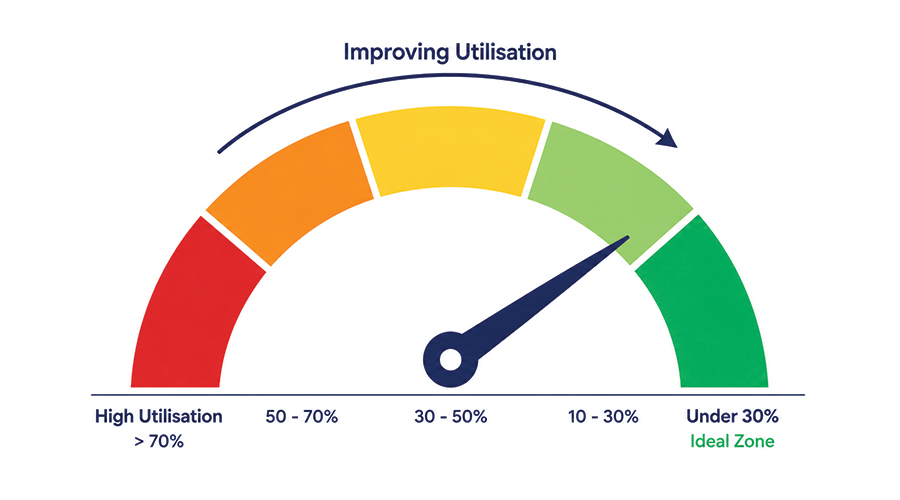
Credit utilisation ratio measures the percentage of your available revolving credit that is currently in use. It is calculated by dividing your total outstanding credit card balances by your total credit limits. For example, if you have a combined credit limit of ₹1,00,000 and outstanding balances of ₹25,000, your utilisation ratio is 25%. Credit utilisation is the second most important factor affecting your credit score and is one of the easiest to improve.
Steps to Reduce Your Credit Utilisation Ratio
- Lenders generally view lower utilisation more favourably. Thus, aim to use less than 30% of your available credit, and ideally keep it between 10–20%. This indicates responsible credit management and lower dependence on borrowed funds.
- Credit card issuers usually report the balance shown on your statement, not your current balance. If your statement reflects a high balance, it may increase your reported utilisation even if you pay it later. Making payments before the statement date can reduce your utilisation ratio.
- If you have a strong repayment history, consider requesting a credit limit increase. A higher limit can lower your utilisation ratio, as the same spending represents a smaller portion of your available credit. However, avoid increasing your spending simply because more credit is available.
3. How to Repair Credit Score Issues Caused by Report Errors
Credit reports are built using data submitted by lenders, so errors can sometimes occur. These discrepancies can affect your credit score and potentially impact loan or credit card approvals.
If you notice an error, review your full credit report, not just your score, and gather supporting documents such as a loan closure letter, NOC, payment receipt, or bank statement. Then raise the issue directly with CRIF HighMark. They will verify the information with the lender before making any corrections to your report.
Common discrepancies to watch for:
- Closed accounts reported as active
- Incorrect late-payment or overdue entries
- Wrong outstanding balances
- Duplicate accounts
- Accounts that do not belong to you
- Errors in personal information
Under RBI guidelines, credit-information disputes should generally be resolved within 30 days of filing. However, disputes can only be used to correct factual errors in your credit report. Accurate negative information, such as a genuine missed payment or overdue balance, cannot be removed through the dispute process.
4. Avoid Multiple Loan or Card Applications at Once
Every formal loan or credit card application results in a hard inquiry, which is recorded on your credit report and may cause a small, temporary dip in your score. In contrast, checking your own credit score or using a lender's eligibility or pre-qualification tool generally creates a soft inquiry, which does not affect your score.
If an application is rejected, avoid immediately submitting another application elsewhere. While other lenders may not see the rejection itself, they can see the recent hard inquiries on your credit report. Instead, take some time to understand why the application was declined and address any underlying issues before reapplying. This can help reduce unnecessary inquiries and improve your chances of approval.
5. Don't Close Your Oldest Credit Accounts
The length of your credit history is an important factor in credit scoring, which is why older accounts can be valuable even if you rarely use them. Your oldest account helps establish a longer credit track record, giving lenders more information about your borrowing behaviour.
Therefore, before deciding to close an older account, consider whether there are alternatives that would allow you to keep it open. If the account carries an annual fee, for example, you could ask the issuer whether it can be converted to a no-fee version instead. Closing the account may also reduce your total available credit, which can increase your credit utilisation ratio if your balances remain unchanged.
6. Diversify Your Credit Mix Sensibly
Having a mix of credit products, such as credit cards and loans, can strengthen your credit profile by showing lenders you can manage both revolving and instalment credit responsibly.
A few things to keep in mind:
- A mix of 2–3 well-managed account types is generally sufficient.
- Opening new credit solely to improve your credit mix is rarely worthwhile.
- New applications can trigger hard inquiries, which may temporarily lower your score.
- Additional loans also increase your overall debt obligations and monthly repayment commitments.
Credit mix is a relatively minor scoring factor compared with payment history, credit utilisation, and length of credit history. For most borrowers, consistently paying on time and keeping credit card balances low will have a greater impact on their score than actively trying to diversify their credit accounts.
7. Consider a Secured Credit Card If You're Starting Over
If your score is low because you have a limited credit history rather than recent defaults, a secured credit card, can be a practical way to rebuild credit. A secured card is backed by a fixed deposit (FD) that you place with the bank, which serves as collateral and reduces the lender's risk.
Use the card for small recurring expenses and pay the full balance on time each month. It helps establish a positive payment record and is reported to credit bureaus just like a regular credit card. Many banks may also offer an upgrade to an unsecured card after a period of responsible use. Keep in mind that missed payments on a secured card are reported and scored the same way as missed payments on any other credit card; the FD backing the card does not lessen their impact on your credit score.
8. Settle or Pay Off Overdue Accounts in Full
If you're behind on repayments, paying the full outstanding amount is almost always better for your long-term credit profile rather than accepting a settlement.
| Criteria | Pay Overdue Amount in Full | Settle the Account |
|---|---|---|
| Definition | Repay the entire outstanding balance, including applicable interest and charges. | Repay only a portion of the outstanding amount, with the lender agreeing to waive the remaining balance |
| Credit Report Status | Generally supports stronger loan and credit card approval prospects | May reduce your chances of future credit approval, as lenders may view it as a higher-risk repayment history. |
| Can It Be Improved Later? | No further action is usually needed once the account is closed. | Yes. You may repay the waived amount later, obtain a No Objection Certificate (NOC), and request the lender to update the account status from "Settled" to "Closed." |
9. Set Up Auto-Pay and Reminders to Increase Your Credit Score
Since payment history has the greatest impact on your credit score, the best approach is to set up auto-debit for at least the minimum due amount and add a reminder 3–5 days in advance. So you have time to pay the full balance.
Also, remember that auto-debit instructions are not foolproof. If there are insufficient funds in your bank account on the payment date, the transaction may fail and still be reported as a missed payment. Thus, you must regularly monitor your linked account balance and confirm that scheduled payments have been successfully processed. Keeping a small buffer in your linked account can also help prevent missed payments caused by insufficient funds.
10. Track Your Score Regularly and Be Patient
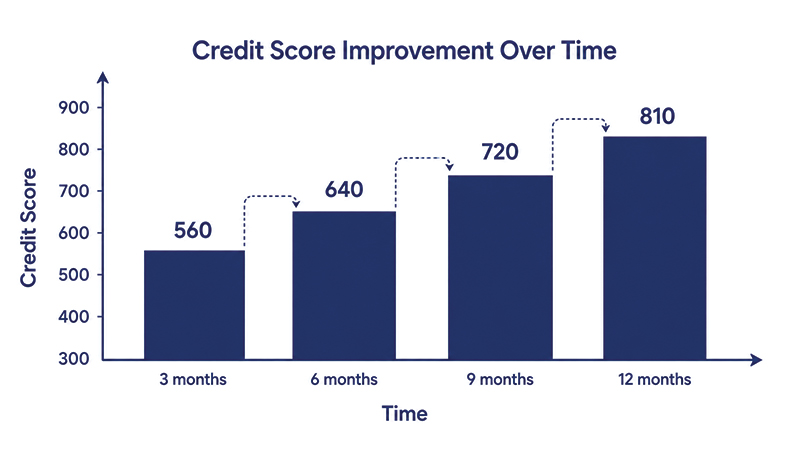
Credit reports are typically updated every 2–4 weeks as lenders submit fresh account data. Thus, it's a good idea to review your full credit report (not just the score) every few months. Check if your account details, payment records, credit limits, and recent inquiries are accurate. You're also entitled to one free credit report from CRIF HighMark each year, making regular monitoring both practical and cost-free.
How to Fix Credit Score Issues for Long-Term Improvement
Improving a credit score takes consistent effort rather than a single action. Timely payments, low credit utilisation, accurate credit reports, fewer unnecessary applications, and a healthy credit mix can gradually strengthen your score.
While some changes may appear within a reporting cycle, improvements linked to payment history often take longer, as credit bureaus place greater importance on sustained positive behaviour.
By focusing on these high-impact factors and maintaining good financial habits, most borrowers can achieve meaningful and lasting score improvement.
Frequently Asked Questions
1. Does checking my own credit score lower it?
No. A self-check is a soft inquiry and doesn't affect your score. Only a hard inquiry, triggered when a lender pulls your report for an actual application, can have an impact.
2. How long does a credit dispute take to resolve?
A credit dispute can take up to 30 calendar days to be resolved after it is filed. Under the RBI's framework, if the dispute remains unresolved beyond this period, the responsible party, whether the lender or the credit bureau, may be required to pay compensation of ₹100 for each day of delay until the issue is resolved.
3. Is a "Settled" status permanent?
No. If you pay the remaining waived amount, obtain a No Objection Certificate (NOC) from the lender, and successfully dispute the entry, the account may be updated from "Settled" to "Closed" on your credit report.
4. How to fix credit scores fast?
There is no instant fix, but you can improve your score faster by paying overdue bills, reducing credit utilisation, correcting report errors, and avoiding unnecessary credit applications.
5. Can I fix my credit score myself?
Yes. By reviewing your credit report, making timely payments, managing debt responsibly, and maintaining healthy credit habits, you can improve your score on your own.
Disclaimer: This article is intended for general educational purposes only and should not be considered financial or legal advice. Credit reporting timelines, CRIF Credit Score calculations, and lender policies may vary. Always verify your account details with your lender and refer to your latest CRIF HighMark credit report for the most accurate information.
Written by: CRIF Editorial Team | Published: July 2026 | Last Updated: July 2026