
What Does Your Credit Score Number Actually Mean?

The meaning of your credit score is simple: it's a three-digit number, usually ranging from 300 to 900, that summarises how you've managed credit over time. Lenders use this number to quickly understand your repayment behaviour and assess how likely you are to repay a loan or credit card on time.
While your score doesn't guarantee approval or rejection, it plays an important role in many lending decisions. Knowing what your credit score means can help you understand what lenders see when you apply for credit.
What Does Credit Score Mean?
Your score condenses years of financial behaviour into one number: how many loans and cards you've held, whether you've paid on time, how much of your available credit you're using, and how long you've been borrowing responsibly. So, if you’re wondering, “What is the meaning of credit score?” it updates as your behaviour does.
A higher score suggests you've managed credit responsibly, while a lower score may indicate missed payments, high outstanding balances, or limited credit history. But your score is only one part of your overall credit profile.
Example:
Riya, a 29-year-old marketing executive from Pune, had a credit score of 690 when she started planning for a home loan.
Although she'd never missed an EMI, she often used most of her credit card limit and occasionally paid only the minimum amount due. After reviewing her credit report, she began paying her bills in full, kept her credit utilisation lower, and avoided applying for new credit unnecessarily.
Over the next eight months, her credit score improved to 748. While a higher score doesn't guarantee loan approval, it gave lenders greater confidence in her repayment behaviour when she applied for a home loan.
From the Bureau's Desk
Credit bureaus calculate credit scores using credit information reported by lenders. The score reflects your reported credit behaviour. It is not based on income, profession, or personal opinions.
Who Calculates Your Credit Score and How?
Four RBI-licensed credit bureaus operate in India, including CRIF HighMark. Each one draws on data from banks and lenders every time you borrow or repay, then runs it through its own scoring model to arrive at your number.
So, what is credit score meaning? The exact formula each bureau uses is proprietary, but the broad building blocks are consistent across all of them.
What Do Lenders See When They Check Your Score?
Your credit score's meaning helps lenders quickly assess your past credit behaviour, but they usually review your complete credit profile before making a decision.
They may look at:
- Your repayment history: Whether you've paid previous loans and credit cards on time.
- Outstanding balances: How much credit you're currently using.
- Active loan accounts: The types of credit you already have.
- Recent credit enquiries: Whether you've applied for multiple loans or credit cards recently.
Depending on your overall profile, lenders may use this information while deciding on loan approvals, credit limits or applicable interest rates.
What Does a Good Credit Score Mean?
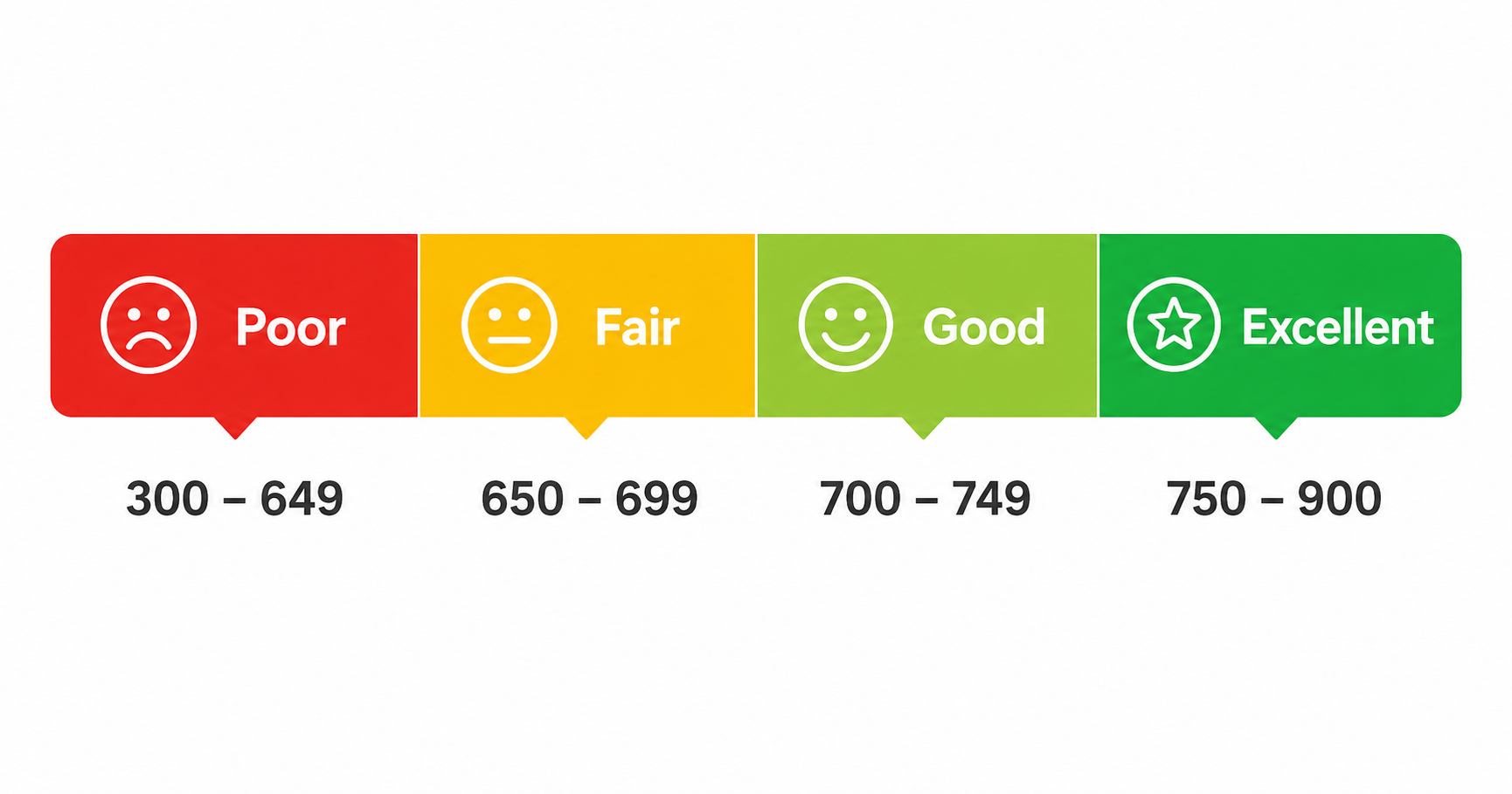
While every lender has its own lending policy, credit scores are commonly interpreted as follows:
| Credit Score | What It Generally Means |
|---|---|
| 300–549 | Poor – May make borrowing more difficult |
| 550–649 | Fair – May qualify with stricter lending terms |
| 650–749 | Good – Generally reflects responsible credit behaviour |
| 750–900 | Excellent – May improve eligibility for competitive credit offers |
Understanding what a good credit score means can help you set realistic financial goals. For a detailed explanation of each score range, read our guide on What Is a Good Credit Score.
What Affects the Number?
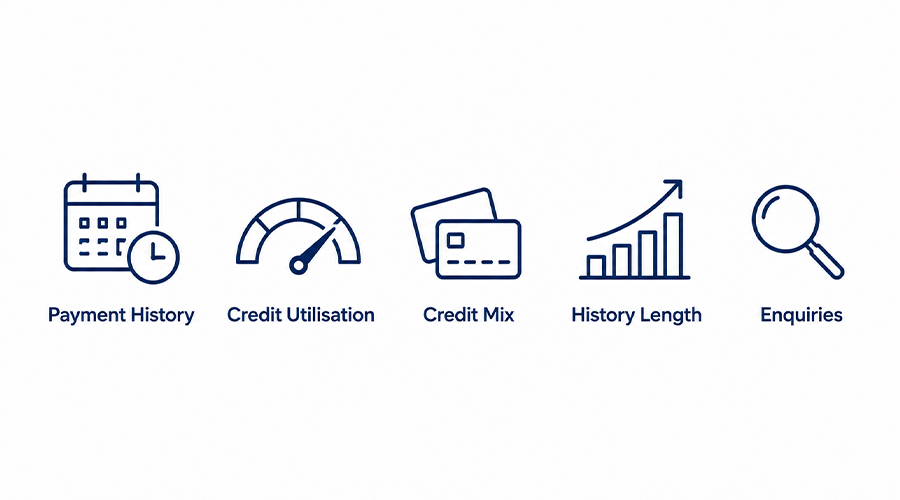
Your credit score meaning changes over time based on how you manage credit. Some of the main factors include:
- Payment history – Paying EMIs and credit card bills on time.
- Credit utilisation – Keeping credit card usage at reasonable levels.
- Credit history length – Maintaining older accounts responsibly.
- Credit mix – Managing different types of credit responsibly.
- New credit applications – Applying for credit only when necessary.
Small, consistent financial habits often have a greater long-term impact than one-off actions.
Want to learn more? Read our detailed guide on credit score factors.
Know What Your Number Is Telling You
Your credit score meaning offers a quick summary of your credit behaviour and helps lenders make informed decisions. The good news is that it can change over time as your financial habits improve.
Whether you're planning to apply for a loan or simply want to stay financially aware, understanding your score is the first step. Know your number; check your Credit Score for free.
Frequently Asked Questions
1. What is the meaning of a credit score?
It's a three-digit summary, typically 300 to 900, of how reliably you've handled credit in the past, based on your actual repayment record.
2. What does a credit score mean in simple terms?
It means how responsibly you've managed borrowed money in the past. A higher score reflects stronger repayment behaviour, while a lower score may indicate greater lending risk.
3. What does a good credit score mean?
Generally, a score above 700 signals low risk to lenders and tends to bring easier approvals and better rates.
4. What does a 0 credit score mean?
A 0 or blank reading usually means there isn't yet enough credit history to generate a score, common for first-time borrowers. It isn't a black mark; it just means your track record is still being built.
5. Why should I check my credit report regularly?
Checking your credit report helps you understand the information contributing to your score, monitor your credit behaviour and identify any inaccuracies that should be reported to the concerned lender or credit bureau.
Disclaimer: This article is intended for general educational purposes only and should not be considered financial or legal advice. Credit reporting timelines, CRIF Credit Score calculations, and lender policies may vary. Always verify your account details with your lender and refer to your latest CRIF HighMark credit report for the most accurate information.
Written by: CRIF Editorial Team | Published: July 2026 | Last Updated: July 2026