
NPA Meaning: What a Non-Performing Asset Means for Your Credit Profile

If you're wondering,” What is NPA?” it refers to a loan account that remains overdue for more than 90 days, after which lenders classify it as a Non-Performing Asset in line with regulatory guidelines.
While this is a banking classification, it can also affect your credit profile and future borrowing opportunities. Understanding the meaning of NPA is the first step towards protecting your financial health and making informed credit decisions
What Does NPA Mean in Banking?
The full form of NPA is Non-Performing Asset. In simple terms, an NPA is a loan or advance where the borrower has not made the required repayments for more than 90 days. According to the Reserve Bank of India (RBI), banks and financial institutions classify such accounts as NPAs once they cross this overdue period.
When referring to NPA in banking, the classification helps lenders identify loans that are no longer generating income because repayments have stopped. Although the loan is treated as a non-performing asset by the lender, the borrower remains legally responsible for repaying the outstanding amount.
CRIF HighMark, one of India's top Credit Bureaus, receives credit information reported by lenders, helping create credit reports that reflect a borrower's repayment behaviour and credit history.
Types of NPA
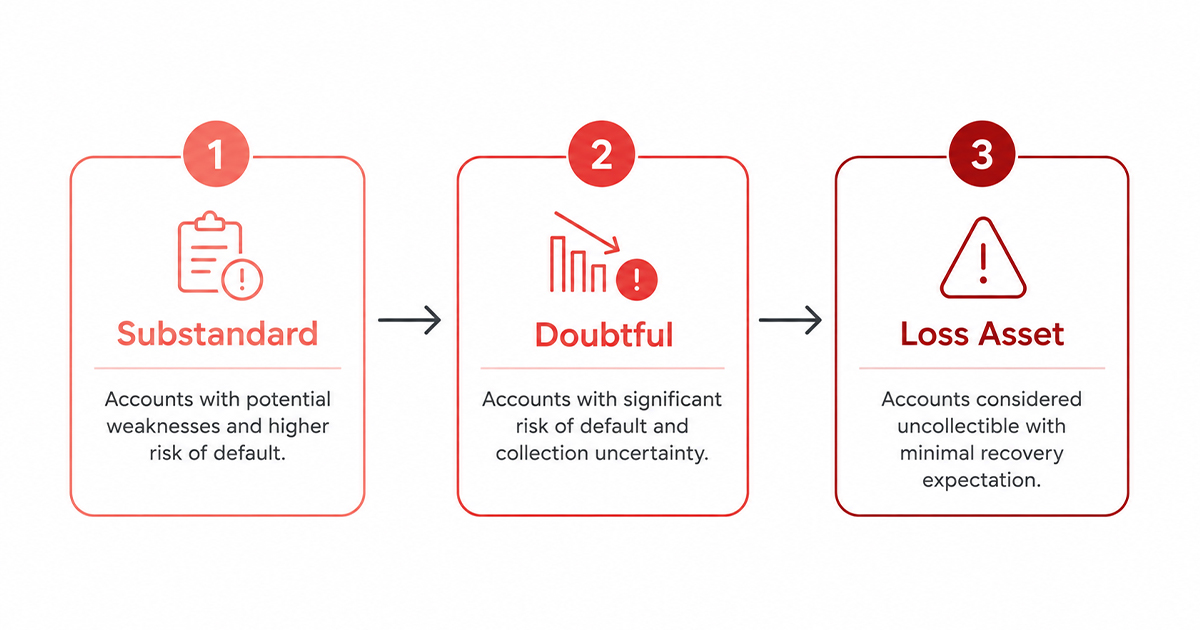
There are three main types of NPA, based on how long the account has remained overdue and its likelihood of recovery.
- Substandard Assets
A loan becomes a substandard asset once it has remained an NPA for up to 12 months. At this stage, the borrower has already missed repayments for an extended period, but there may still be a reasonable chance of recovering the dues. - Doubtful Assets
If the account continues to remain an NPA for more than 12 months, it is classified as a doubtful asset. The longer the loan remains unpaid, the lower the chances of full recovery, making it a higher risk for the lender. - Loss Assets
Loss assets are loans that lenders or auditors identify as having little or no recovery value. Although recovery efforts may continue, these accounts are generally considered unlikely to be recovered in full and represent the most severe category of NPA.
For most borrowers, understanding the types of NPA is helpful, but what matters more is how an NPA affects your credit profile and future borrowing.
How an NPA Account Affects Your Credit Profile
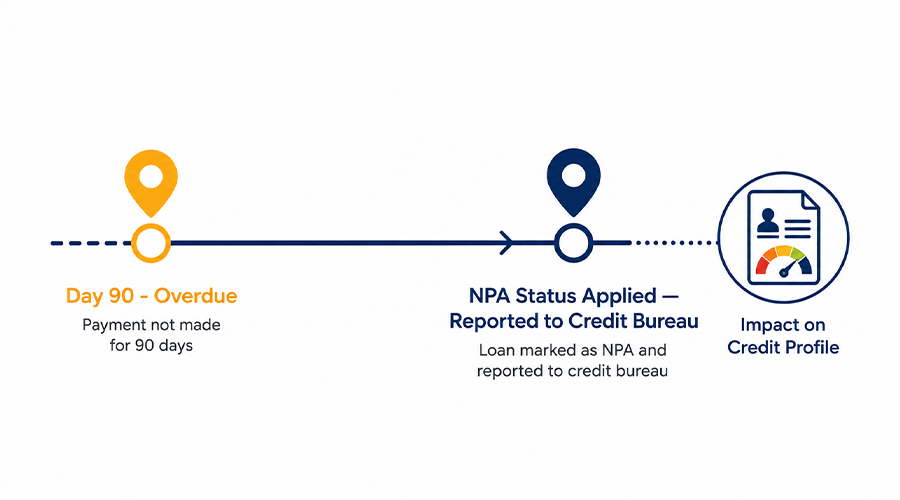
While non-performing assets are primarily a banking classification, they can also have long-term consequences for a borrower's credit profile.
When a loan account becomes an NPA, lenders continue reporting the repayment history to credit bureaus. Future lenders reviewing your credit report may see missed payments, prolonged defaults, and the account's repayment status while assessing new loan applications.
An NPA may:
- Lower your credit score over time.
- Reduce your chances of loan or credit card approval.
- Result in stricter lending terms or higher interest rates.
- Affect your ability to access credit until your repayment behaviour improves.
In some cases, an unresolved NPA may eventually lead to other account statuses, such as a written-off status, depending on the lender's recovery process and internal policies.
From the Bureau's Desk
Credit bureaus do not independently classify loan accounts as NPAs. Your credit report reflects the information reported by lenders, helping future lenders assess your repayment history and overall credit behaviour.
Can You Get a Loan After an NPA?
Having an NPA does not automatically mean you will never qualify for another loan. However, lenders are likely to assess your application more carefully.
Before approving new credit, banks and NBFCs typically consider:
- Whether the NPA has been repaid or resolved.
- Your current income and repayment capacity.
- Your recent repayment behaviour.
- Your overall credit profile.
You may also come across the terms Gross NPA and Net NPA.
- Gross NPA refers to the total value of non-performing loans held by a lender.
- Net NPA is the value that remains after accounting for provisions set aside to cover expected losses.
These are measures used to assess a lender's asset quality and are different from an individual borrower's NPA status.
If you've already resolved an overdue account through a settlement, understanding whether you can get a loan after settlement can help you better understand how lenders may evaluate future applications.
Before applying again, it's also a good idea to see your full credit report to review the information lenders are likely to assess.
How to Avoid or Recover From an NPA Status
The best way to protect your credit profile is to prevent a loan account from becoming an NPA. If your account has already been classified as one, taking corrective action early can improve your financial position over time. Use this checklist:
- Pay EMIs on or before the due date to maintain a positive repayment history.
- Contact your lender early if you're facing financial difficulties. Many lenders may offer restructuring or repayment solutions before the account becomes an NPA.
- Monitor your credit report regularly to stay informed about your repayment history and account status.
- Resolve outstanding dues as soon as possible and request your lender to update the latest account information.
- Maintain responsible credit behaviour after resolving the account to gradually strengthen your credit profile.
Small, consistent financial habits can help reduce the long-term impact of an NPA and improve your future borrowing prospects.
Take Charge of Your Credit Profile
An NPA can affect both your credit profile and your ability to obtain future loans, but it doesn't have to define your financial future.
Resolving outstanding dues, maintaining timely repayments, and regularly checking your credit report can help you rebuild your creditworthiness over time. Staying informed about your credit profile today can make future borrowing decisions easier.
→ Check Your Credit Score
Understand how your credit profile may be affected by an NPA. Check your CRIF Score for free.
Frequently Asked Questions
1. What is an NPA account?
An NPA account is a loan account where repayments have remained overdue for more than 90 days. Once this happens, the lender classifies it as a Non-Performing Asset according to RBI guidelines.
2. How many types of NPA are there?
There are three main types of NPA: Substandard Assets, Doubtful Assets, and Loss Assets. These categories reflect the duration of default and the likelihood of recovering the outstanding dues.
3. Does an NPA affect my credit score?
Yes. An NPA may negatively affect your credit score and credit profile because it indicates prolonged default on payments. Future lenders may also consider this information while assessing new credit applications.
4. Can an NPA be removed from my credit report?
An NPA cannot simply be removed. Once the outstanding dues are resolved, the lender updates the latest account information with the credit bureau, and your credit profile may gradually improve through responsible repayment behaviour.
5: What is NPA in banking?
The NPA meaning in banking refers to a loan account that remains overdue for more than 90 days and is classified as a Non-Performing Asset as per RBI guidelines.
Disclaimer: This article is intended for general educational purposes only and should not be considered financial or legal advice. Credit reporting timelines, CRIF Credit Score calculations, and lender policies may vary. Always verify your account details with your lender and refer to your latest CRIF HighMark credit report for the most accurate information.
Written by: CRIF Editorial Team | Published: July 2026 | Last Updated: July 2026