
How to Improve Credit Score on a Low Income?

A low income does not automatically mean a low credit score. Credit bureaus evaluate how responsibly you manage credit, not how much you earn. With disciplined repayment habits and smart credit usage, you can steadily build a stronger credit profile even on a limited budget.
In this guide, we'll explain how to improve credit score with low income, the habits that matter most, and practical steps you can take to build stronger credit over time.
Does Income Directly Affect Your Credit Score?
Many people assume a higher income automatically leads to a better credit score. In reality, income is not considered while calculating your credit score. Instead, credit bureaus assess factors such as repayment history, credit utilisation, credit age, credit mix, and recent credit enquiries. This means someone earning ₹20,000 a month who consistently pays on time can have a stronger credit profile than someone earning significantly more but missing repayments.
From the Bureau's Desk
At CRIF HighMark, income is not a factor in your credit score. We assess repayment behaviour, credit utilisation, account age, and credit mix. Responsible credit habits, not your salary, are what build a stronger credit profile.
Start with a Credit Health Review
Before improving your credit score, review your credit report to understand what's affecting it. Check your repayment history, outstanding balances, credit utilisation, and any reporting errors before deciding what to fix first.
What to Look for in Your Credit Report
When reviewing your credit report, pay close attention to:
- Missed or delayed payments
- Credit utilisation above 30%
- Incorrect account details or duplicate accounts
Correcting these issues early can help strengthen your credit profile.
Pay Bills on Time, Every Time
Your repayment history is one of the biggest factors affecting your credit score. Even a single missed EMI or credit card payment can remain on your credit report and influence how lenders assess your creditworthiness.
Set up auto-debit or payment reminders to avoid missed due dates. Consistent on-time payments remain one of the strongest drivers of a healthy credit score.
Missed even one payment?
Learn how late payments affect your credit score and what steps you can take to minimise the impact.
Use Secured Credit Cards Wisely
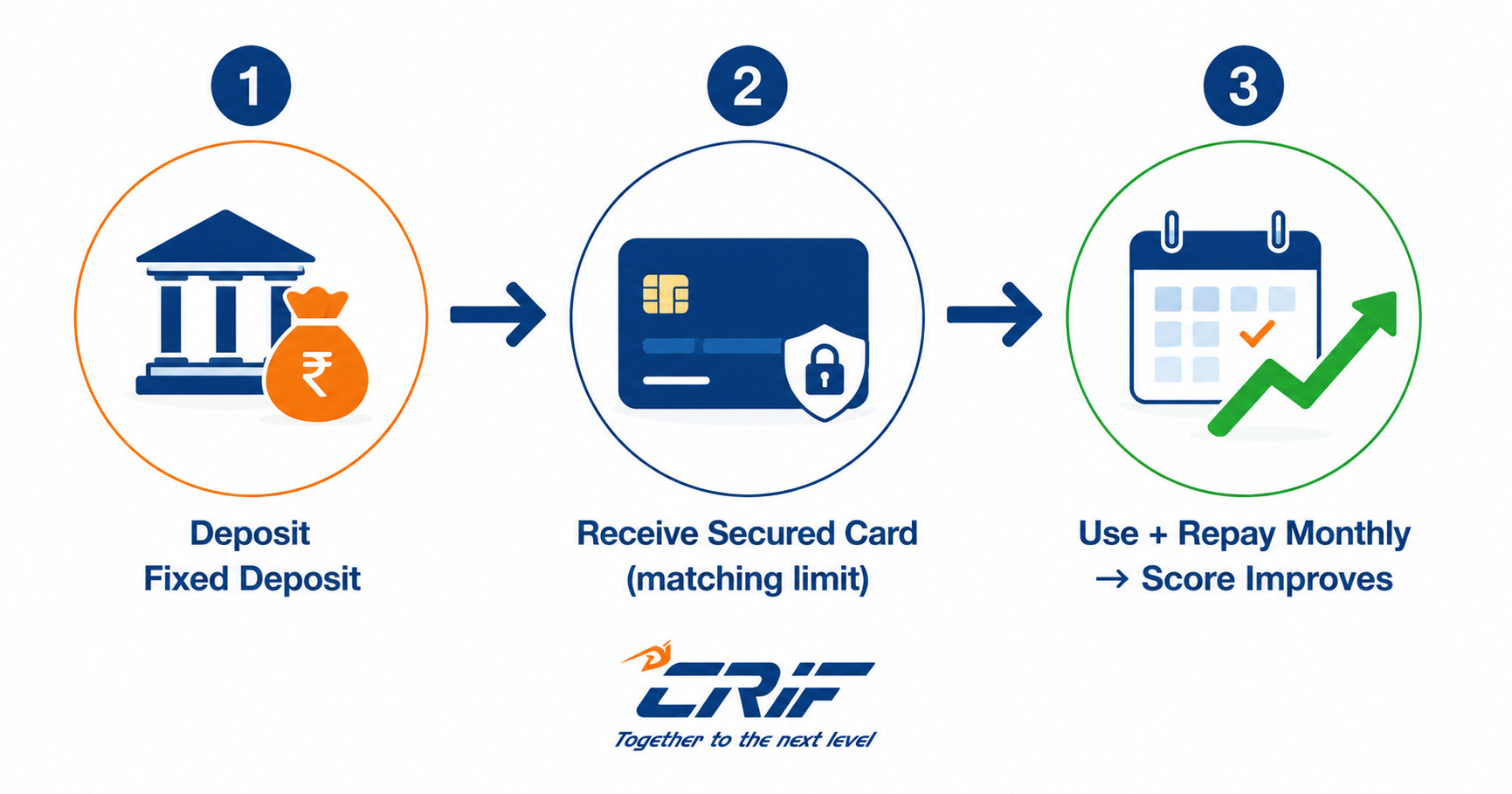
If you have a limited income or little credit history, a secured credit card in India can be one of the easiest ways to start building your credit profile. It helps establish a positive repayment history without requiring a high income.
Use the card only for planned monthly expenses, such as groceries, utility bills, or mobile recharges, and pay the full outstanding balance by the due date every month. Consistent, full repayments help strengthen your credit profile over time.
Keep Your Credit Utilisation Below 30%
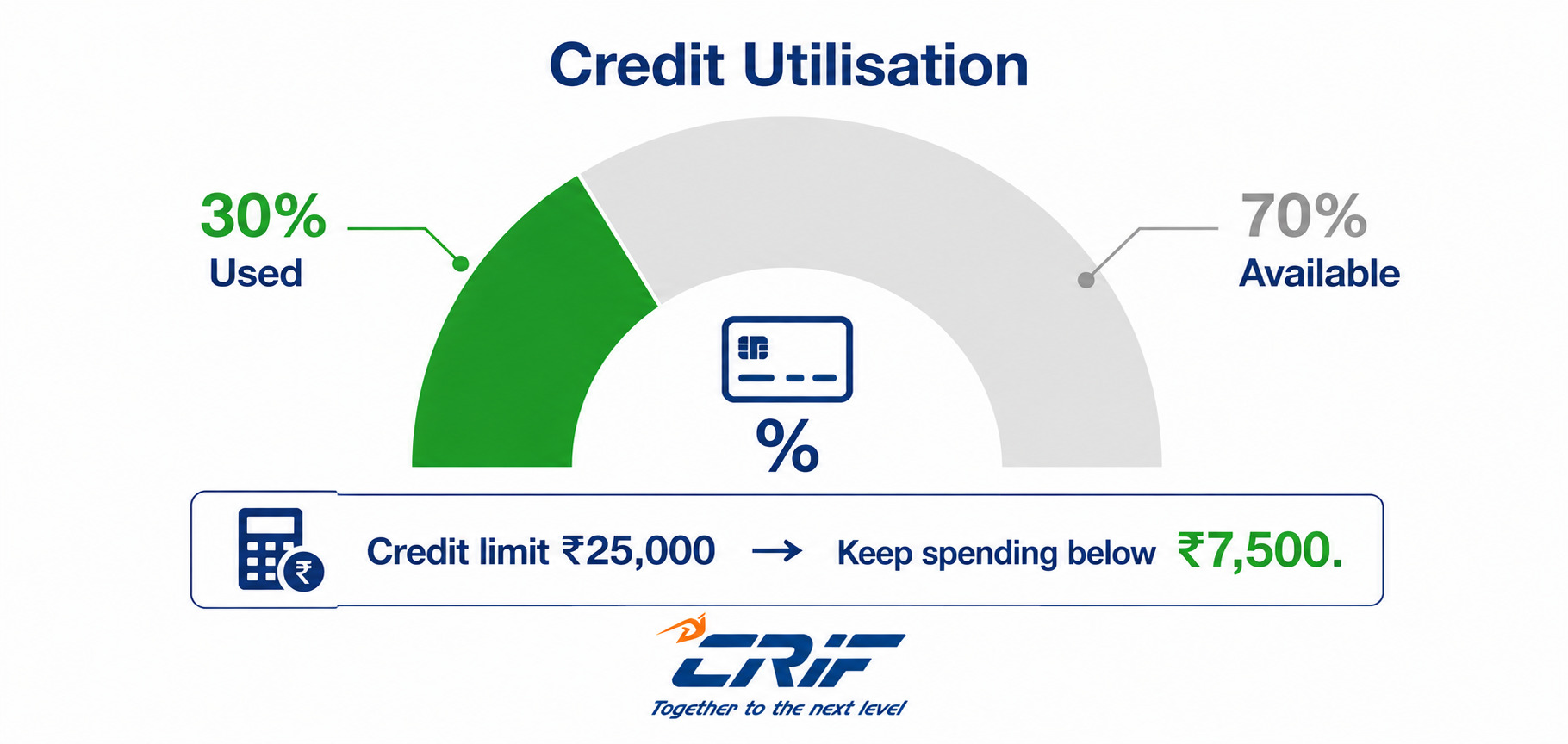
Your credit utilisation ratio is the percentage of your available credit limit that you're using. Keeping it below 30% can positively influence your credit score. For example, if your credit card limit is ₹25,000, aim to keep monthly spending below ₹7,500.
If you're managing multiple dues, read our guide on which debts to pay off first to improve your credit score and prioritise repayments effectively.
Avoid Multiple Credit Applications
Applying for several loans or credit cards within a short period results in multiple hard inquiries, which may temporarily lower your credit score. Apply only when necessary and space applications several months apart.
Maintain a Balanced Credit Mix
A mix of revolving credit (such as credit cards) and instalment loans can strengthen your credit profile over time. However, don't borrow unnecessarily; only take credit that genuinely meets your financial needs.
Learn how The Role of Credit Mix in Improving Your Credit Score can strengthen your credit profile
Become an Authorised User on a Family Member's Account
If you're just starting to build credit, becoming an authorised user on the credit card of a financially responsible family member can help establish your credit history.
When the primary cardholder has a strong repayment record, their positive payment history may also be reflected in your credit profile, even if you rarely use the card. However, this strategy works only if the account is well managed. Missed payments, high credit utilisation, or defaults by the primary cardholder can also affect your credit profile
From the Bureau's Desk
A well-managed authorised user account can help build your credit history. This works only if the primary cardholder maintains good repayment habits.
How Long Does It Take to Improve Your Credit Score?
Improving your credit score takes time and consistent financial discipline. While there is no fixed timeline, positive credit behaviour can gradually strengthen your credit profile over the months.
- 1–3 months: Recent repayments begin reflecting.
- Around 6 months: Consistent repayments and low utilisation may improve your score.
- Around 12 months: Long-term responsible behaviour can significantly strengthen your credit profile.
Remember, there are no shortcuts to how to increase credit score quickly. The most effective approach is to build healthy credit habits and maintain them consistently over time.
While your score is improving, you may still need access to credit; explore personal loan options for low credit score borrowers in the meantime.
A Realistic Example of Building Credit on a Low Income
Priya, a 26-year-old schoolteacher from Bhopal earning ₹18,000 a month, had a credit score of 601 and couldn't qualify for an unsecured credit card.
She opened a secured credit card against a ₹20,000 fixed deposit, used it only for regular monthly expenses, and paid the full balance every month through auto-debit. After 11 months of full repayments, her score improved to 689, helping her qualify for an unsecured credit card.
Learn how Check Your Credit Score Free →
Strengthen Your Credit, One Step at a Time
A limited income doesn't have to limit your credit score. Paying on time, keeping utilisation low, using a secured credit card responsibly, and reviewing your credit report regularly can strengthen your credit profile over time.
Frequently Asked Questions
1. Does income affect your credit score in India?
No. Credit bureaus evaluate repayment behaviour, credit utilisation, credit age, and credit mix, not your income.
2. How to build a credit score with a low income?
The most effective way to improve your credit score with low income is to pay all EMIs and credit card bills on time, keep your credit utilisation below 30%, avoid multiple credit applications, and review your credit report regularly.
3. Can I get a credit card with a low income?
Yes. A secured credit card in India, backed by a fixed deposit, can help you build your credit history.
4. How much income do I need to build a good credit score?
There is no minimum income requirement. Responsible credit behaviour matters far more than earnings.
5. Can I improve my credit score without taking a loan?
Yes. Using a secured credit card responsibly and paying all dues on time can help build a strong credit history.
Disclaimer: This article is intended for general educational purposes only and should not be considered financial or legal advice. Credit reporting timelines, CRIF Credit Score calculations, and lender policies may vary. Always verify your account details with your lender and refer to your latest CRIF HighMark credit report for the most accurate information.
Written by: CRIF Editorial Team | Published: August 2026 | Last Updated: August 2026