
Credit Score Required for a Home Loan: What Lenders Actually Check

However, your credit score is only one part of the overall assessment. Lenders also review your income, existing financial obligations, repayment history, and overall credit profile before making a decision. Knowing where your score stands before you apply can help you plan your home loan journey with greater confidence.
Buying a home is one of the biggest financial decisions you'll make, and your credit score for home loan approval plays an important role in the process. While there is no RBI-mandated minimum credit score, most banks and NBFCs generally prefer applicants with a score of 700–750 or above. A higher score may improve your chances of loan approval and could also help you secure more favourable lending terms.
What Is a Good Credit Score for a Home Loan?
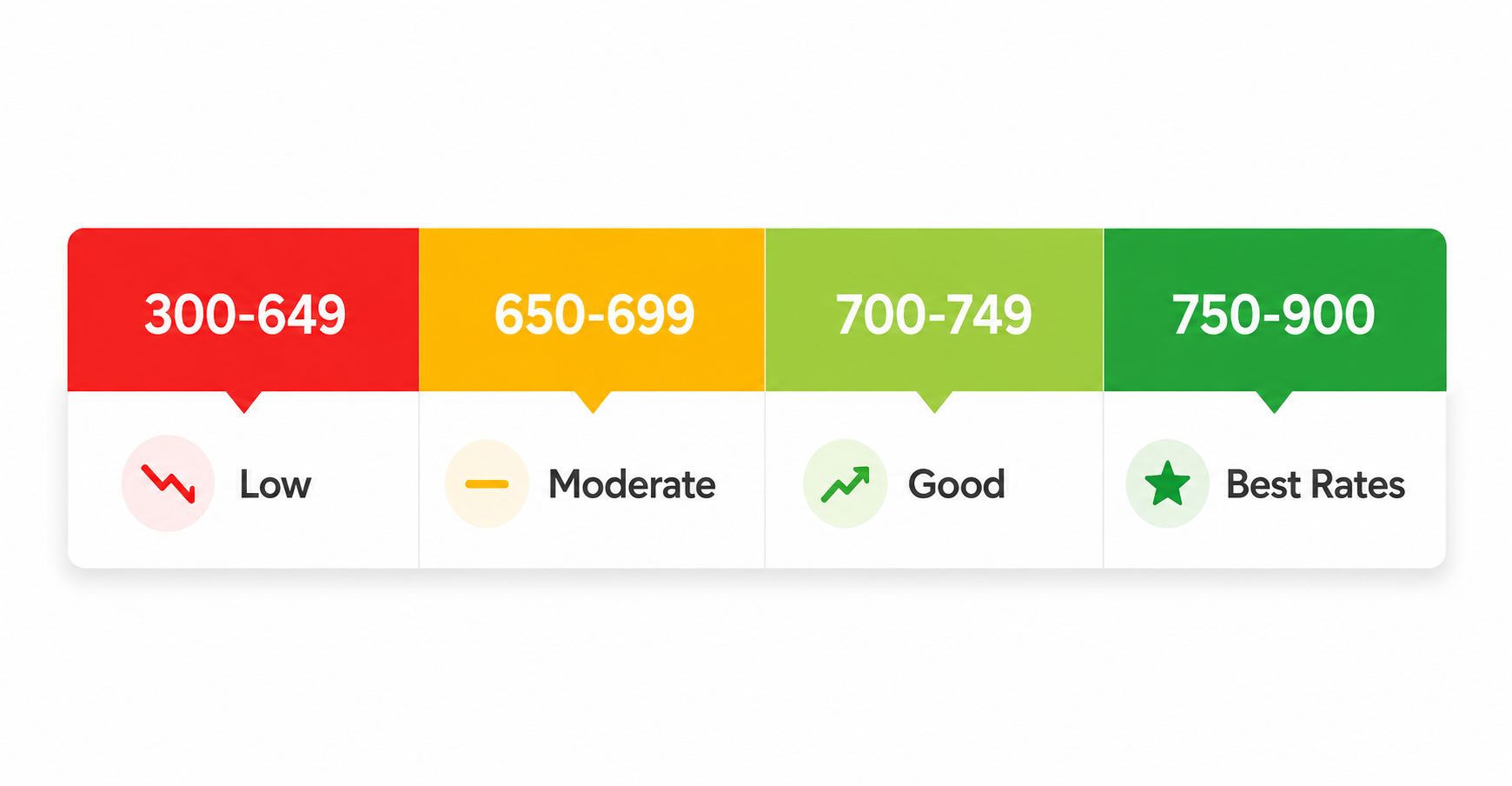
There is no universal credit score required for home loan approval in India. Every lender has its own credit policies and eligibility criteria. However, most banks and housing finance companies consider a score of 700–750 or above to be a strong indicator of responsible credit behaviour. A 777 Credit Score is generally considered a strong credit profile and may improve your chances of home loan approval, subject to the lender's eligibility criteria. Similarly, a 792 Credit Score may place you in an excellent credit range, which can strengthen your home loan application depending on the lender's eligibility criteria.
A good credit score for home loan applications demonstrates that you have managed your previous credit obligations responsibly. This can improve your chances of approval and may also influence the loan amount and interest rate offered.
Here's a general idea of how lenders often view different score ranges:
| Credit Score Range | What It May Indicate | Likelihood of Home Loan Approval |
|---|---|---|
| 750 and above | Excellent credit profile | High approval chances with competitive interest rates |
| 700–749 | Good credit profile | Good approval prospects with most lenders |
| 650–699 | Fair credit profile | Approval may be possible, subject to additional checks |
| Below 650 | Higher lending risk | Approval may be more difficult and could involve stricter conditions |
While this table provides a general guideline, lenders do not rely on your score alone. They also evaluate factors such as your monthly income, employment stability, existing EMIs, debt-to-income ratio, and repayment history before approving a home loan.
From the Bureau's Desk
Your credit score is only one part of the assessment. Lenders also review your credit report before making a home loan decision.
How Credit Score Affects Your Home Loan Interest Rate
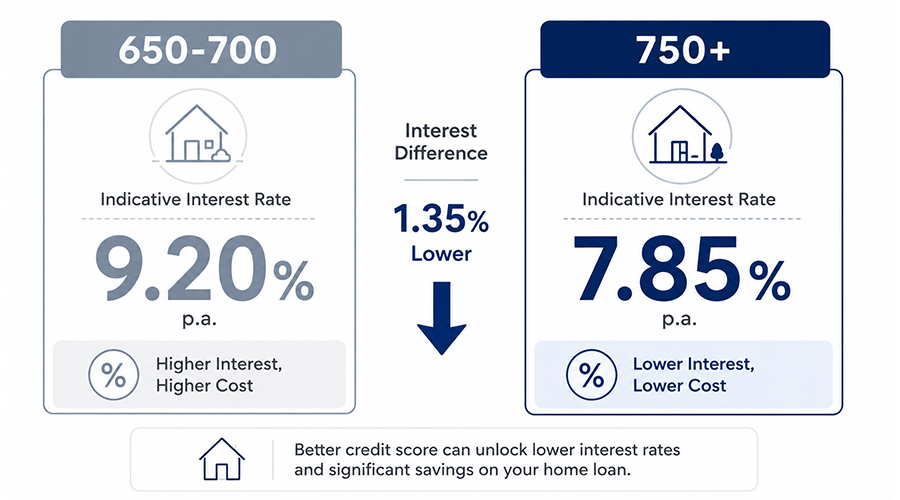
Your credit score does more than influence whether your home loan is approved; it can also affect the interest rate you receive. Since a higher score generally reflects consistent repayment behaviour, lenders may view such borrowers as lower-risk applicants.
Depending on your credit profile, a stronger score may help you:
- Qualify for more competitive home loan interest rates.
- Improve your chances of obtaining a higher loan amount.
- Receive quicker approvals if other eligibility criteria are met.
- Access a wider choice of loan products from banks and NBFCs.
On the other hand, applicants with lower scores may still qualify for a home loan, but lenders may carry out additional checks or request further documentation before making a lending decision.
How Lenders Actually Check Your Credit Score
When you apply for a home loan, the lender doesn't rely solely on the number shown as your credit score. They also review your credit report to understand how you've managed credit over time and whether you're likely to repay the loan responsibly.
Banks and NBFCs typically obtain your credit information from a credit bureau such as CRIF HighMark, one of India's leading credit information companies. Your credit report includes details such as:
- Your current and previous loans.
- Credit card repayment history.
- Outstanding balances and credit utilisation.
- Loan defaults, settlements, or written-off accounts.
- Recent credit enquiries.
Together, this information helps lenders assess your repayment behaviour and overall creditworthiness before making a lending decision. When you apply for a home loan, the lender typically performs a hard enquiry to access your credit report as part of the credit assessment process.
This is different from a soft enquiry, such as when you check your own credit score, which does not affect your credit profile. Reviewing your credit report before applying allows you to identify any inaccuracies and understand what lenders are likely to see during their assessment.
From the Bureau's Desk
Checking your own credit report is considered a soft enquiry and does not affect your credit score. However, multiple hard enquiries from lenders within a short period may indicate frequent credit applications, which lenders may consider during their assessment.
What If Your Credit Score Is Below the Cutoff?
Having a lower credit score doesn't automatically mean your home loan application will be rejected. While many lenders prefer applicants with a score of 700–750 or above, they may also consider other aspects of your financial profile before making a decision.
Maintaining a stable income and reducing existing debt before applying:
- Applying with a co-applicant who has a stronger credit profile.
- Making a higher down payment to reduce the loan amount.
- Reducing existing debt and improving your debt-to-income ratio before applying.
- Demonstrating a stable income and consistent employment history.
If you're not planning to apply immediately, taking a few months to strengthen your credit profile can make a meaningful difference.
How to Improve Your Credit Score Before Applying
If your credit score is lower than you'd like, use this checklist before applying for a home loan:
- Pay all EMIs and credit card bills on time
A consistent repayment history is one of the most important factors lenders consider. - Keep your credit utilisation below 30%
Using only a small portion of your available credit can positively influence your credit profile. - Avoid multiple loan or credit card applications
Submitting several applications within a short period may affect how lenders assess your credit profile. - Review your credit report for inaccuracies
Check your credit report regularly and raise a dispute if you notice any incorrect information. - Maintain responsible credit behaviour consistently
Building a stronger credit profile takes time, so continue practising healthy credit habits even after your score improves.
Following this checklist can help strengthen your credit profile before applying for a home loan. If you're looking for more ways to improve your credit score, understanding the factors that influence it can help you prepare more effectively.
Know Your Credit Score Before You Apply
A strong credit profile can improve your chances of securing a home loan on favourable terms. Before submitting your application, take the time to review your credit score and credit report, address any discrepancies, and ensure your repayment history reflects responsible credit behaviour. Being prepared can help you approach the home loan process with greater confidence.
→ Check Your Credit Score
Know where you stand before your home loan application. Check your credit score for free.
Frequently Asked Questions
1. What is the minimum credit score required for a home loan?
There is no RBI-prescribed minimum credit score for home loan approval. However, many banks and NBFCs prefer applicants with a credit score of 700–750 or above. Approval ultimately depends on the lender's credit policy as well as factors such as your income, repayment capacity, existing financial obligations, and overall credit profile.
2. Can I get a home loan with a low credit score?
Yes. Some lenders may still consider your application based on factors such as your income, repayment capacity, employment stability, or a co-applicant with a stronger credit profile.
3. Which credit score do lenders check for a home loan?
Lenders obtain your credit score and credit report from a credit bureau such as CRIF HighMark to assess your repayment history and overall creditworthiness.
4. Does applying for a home loan affect my credit score?
A home loan application may involve a lender checking your credit report. Applying for multiple loans within a short period can affect your credit profile.
5. Why should I check my credit report regularly?
Checking your credit report helps you understand the information contributing to your score, monitor your credit behaviour and identify any inaccuracies that should be reported to the concerned lender or credit bureau.
Disclaimer: This article is intended for general educational purposes only and should not be considered financial or legal advice. Credit reporting timelines, CRIF Credit Score calculations, and lender policies may vary. Always verify your account details with your lender and refer to your latest CRIF HighMark credit report for the most accurate information.
Written by: CRIF Editorial Team | Published: July 2026 | Last Updated: July 2026