
Loans Without a Credit Score: What You Should Know Before Applying
Short Answer - Loans without credit checks may seem convenient, but they carry higher interest rates, rigid terms, and long-term financial risks. A healthy credit score enables affordable borrowing, better loan terms, and financial stability. Building credit responsibly is safer than relying on unchecked or high-risk loan options.

When you need money urgently and have no credit history, a loan without a credit score can seem convenient. Quick approval and minimal documentation may sound appealing, but the true cost is not always obvious. Higher interest rates, shorter repayment periods and limited credit reporting can leave you paying more without building your credit history.
What Are Loans Without Credit Checks?
Loans without credit checks are borrowing options where the lender does not assess your credit score or detailed credit history. Instead, they may consider income, employment, collateral or a co-signer.
These loans can appeal to borrowers with no credit history or a low score, including those looking for a personal loan no credit history. However, terms vary, so always check the interest rate, fees, repayment period and whether repayments are reported to credit bureaus.
Why Your Credit Score Matters for Loan Approval
Your credit score helps lenders assess your credit behaviour and repayment history. A healthy score can improve your chances of getting more affordable interest rates, suitable repayment terms and higher borrowing limits.
Without a credit history, lenders have less information to assess your repayment behaviour. This can result in higher borrowing costs or stricter terms.
→ Get Your Free Credit Report
Find out where you stand before approaching any lender; your CRIF Credit Report shows your full credit history in minutes
Types of No-Credit-Check Loans in India
If you are exploring no credit check loans in India, common options include:
- Gold loans: Secured against gold, with eligibility primarily based on the value of the pledged asset rather than your credit history.
- Loans against fixed deposits: Secured against an existing fixed deposit, with the loan amount generally linked to the deposit value.
- Payday or app-based loans: Usually short-term borrowing options that offer quick access to funds but can come with higher interest rates and fees.
- Peer-to-peer lending: Platforms that connect borrowers with individual lenders, with eligibility and repayment terms varying across platforms.
While these options can provide access to funds when you have limited or no credit history, they are not automatically cheaper or safer. Before borrowing, check the interest rate, processing fees, repayment tenure, penalties and whether your repayments are reported to credit bureaus.
Risks of Taking a Loan Without a Credit Score
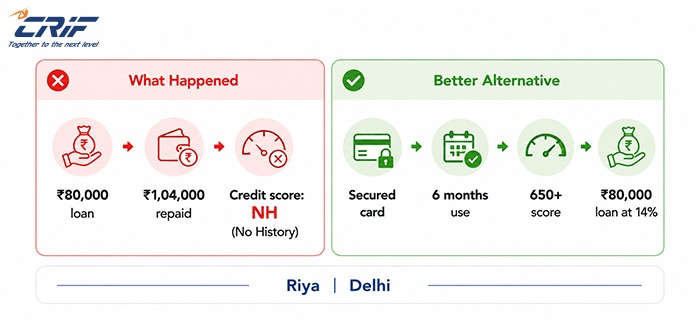
No-credit-check loans can provide quick access to funds, but they can also create long-term financial challenges.
Higher Interest Rates and Hidden Charges
Are interest rates higher for no-credit-history loans? Often, yes. No-credit-check loans can carry rates of around 24–48% annually, compared with roughly 11–18% for standard personal loans.
Processing fees, late-payment charges and prepayment penalties can further increase the total cost. Always compare the overall repayment amount, not just the advertised EMI.
Shorter Tenure and Limited Loan Amounts
These loans may offer shorter repayment periods and lower borrowing limits. A shorter tenure can mean higher EMIs, while limited loan amounts may not fully cover your financial need.
The amount offered may also depend heavily on your income, employment or collateral.
Predatory Lenders and Debt Traps
Borrowers seeking quick loans can encounter illegal loan apps or lenders with excessive charges, unclear terms or aggressive recovery practices.
High costs and short repayment periods can also create a debt cycle, where borrowers take another loan to repay an existing one. Verify the lender's legitimacy before accepting an offer.
Long-Term Damage to Your Credit Future
Many no-credit-check lenders do not report repayments to credit bureaus. You can therefore pay high interest without building a credit history.
This creates a double loss: expensive borrowing today and no credit-building benefit for the future. Missing even one payment in this cycle can compound the damage. Understand how late payments create long-term credit damage and what you can do to recover.
What to Do Instead: Build Your Credit Score First
If you have no credit history, building one can be a safer alternative to taking out a high-cost loan right away.
- Check your credit status: Get your CRIF Credit Report to see whether you already have a credit history and understand your current profile.
- Consider a secured credit card: A card backed by a fixed deposit can help you start using credit responsibly. For example, a ₹15,000 FD can provide a starting point.
- Build responsible habits: Keep utilisation controlled and pay every bill on time. Six months of disciplined credit use can help establish a credit history and improve future borrowing prospects.
Not sure where to start? Read our guide on how to build your credit score from scratch.
If you need funds urgently, explore personal loan options for low credit score borrowers rather than automatically choosing a loan that skips credit checks.
From the Bureau's Desk:
Most lenders who skip credit checks also skip reporting your repayments to credit bureaus. You pay a premium, and still don't build the credit history you need. It's a cost with no long-term benefit.
Track your credit score, monitor changes, and simulate how your actions affect your score, starting from ₹118.
Riya’s Case Study: Paying More Without Building Credit
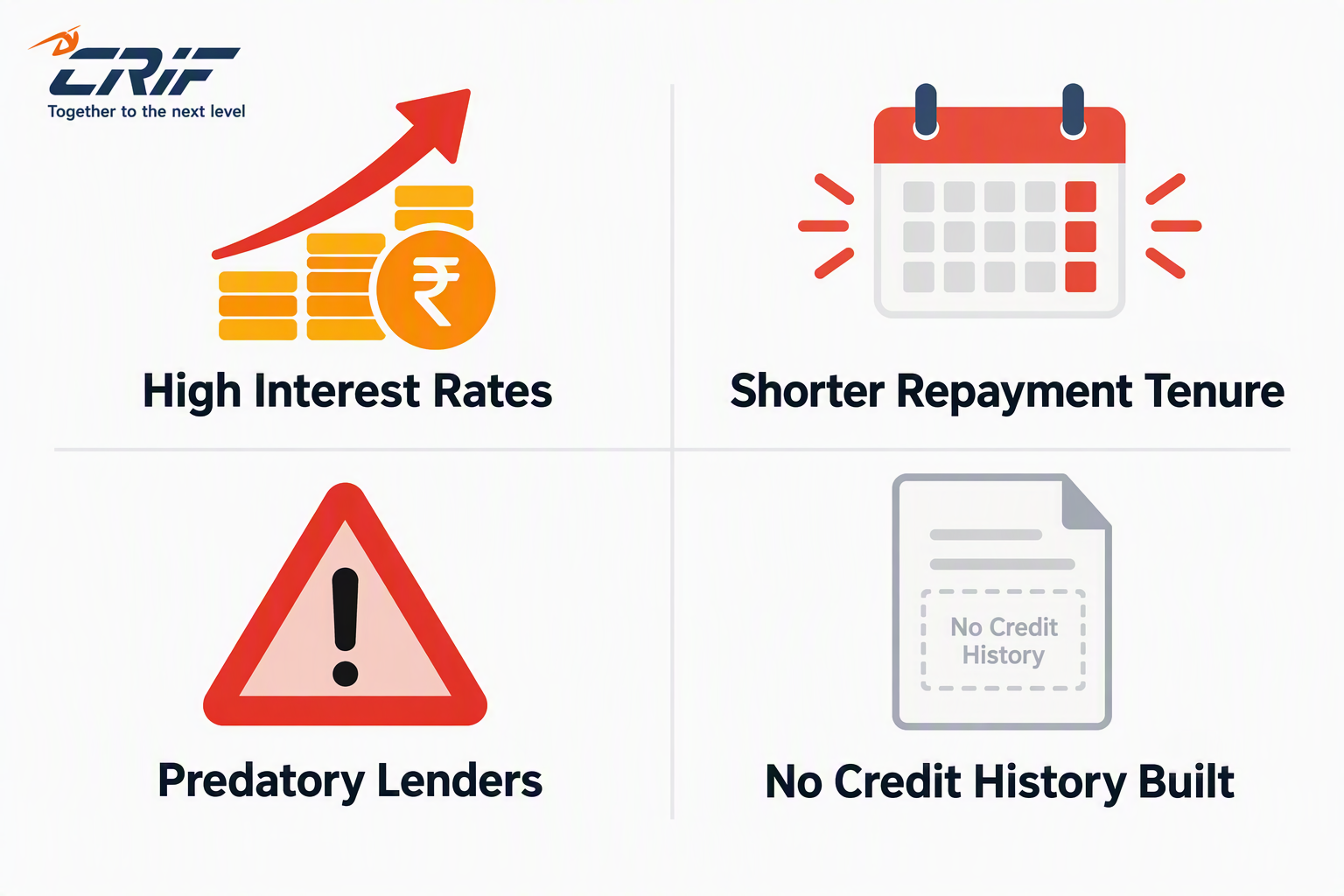
Riya, a 27-year-old freelance graphic designer in Jaipur, had no credit history when she needed ₹80,000 for new equipment. She took a no-credit-check loan at 3% monthly interest, equivalent to 36% annually.
Over 12 months, she repaid ₹1.04 lakh — ₹24,000 more than the principal. The lender did not report her repayments, so her credit profile remained NH (No History).
A better route would have been a secured credit card against a ₹15,000 FD. After six months of responsible use, she could have built a 650+ score and potentially qualified for a personal loan at around 13–15%.
CRIF Insight: Lenders that bypass credit checks may not report positive repayment behaviour. You can pay a significant premium and still finish with no credit history, a double loss.
Choose Credit Wisely for Long-Term Financial Health
A loan without a credit score may solve an immediate cash requirement, but it can cost more while doing little to build your credit history. Building credit responsibly can put you in a stronger position to access affordable borrowing in the future.
Frequently Asked Questions
1. Can I get a loan without a credit score in India?
Yes, some no-credit-check loan options in India are available for borrowers without an established credit history. However, these loans can come with higher costs and stricter terms, so compare the interest rate, fees and repayment conditions before borrowing.
2. Are interest rates higher for loans without a credit score?
They often are because lenders have less credit history to assess risk. Compare the annual interest rate and total repayment cost before borrowing.
3. What is the minimum credit score required for a personal loan?
There is no single minimum score. Eligibility depends on the lender's criteria and your overall financial profile.
4. Do no-credit-check loans get reported to credit bureaus?
Not always. Confirm whether the lender reports repayment activity before borrowing.
5. How long does it take to build a credit score from scratch?
It takes consistent responsible credit use over time. Regular repayments and controlled credit utilisation are key.
Disclaimer: his article is intended for general educational purposes only and should not be considered financial or legal advice. Credit reporting timelines, CRIF Credit Score calculations, and lender policies may vary. Always verify your account details with your lender and refer to your latest CRIF HighMark credit report for the most accurate information.
Written by: CRIF Editorial Team | Published: August 2026 | Last Updated: August 2026